

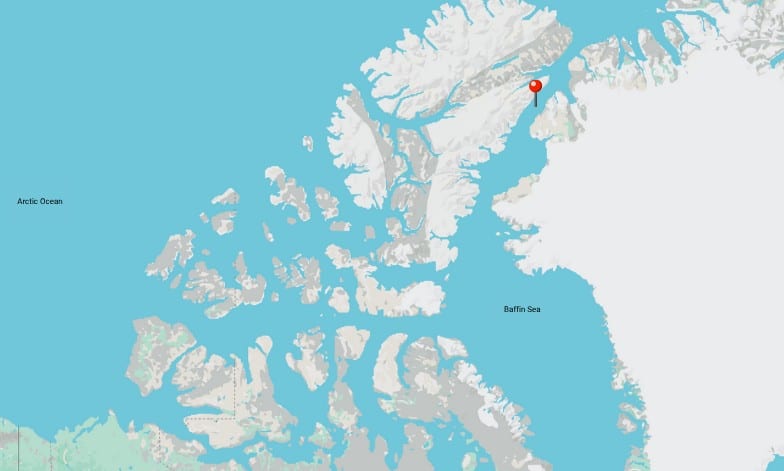
Did you know that Denmark and Canada were involved in a light-hearted territorial dispute that lasted nearly 50 years? From 1973 to 2022, these two northern nations “fought” over Hans Island, a tiny landmass situated between Canada’s Ellesmere Island and Greenland, an autonomous territory of the Kingdom of Denmark. Measuring just 1.2 km², the island became the focal point of a unique international conflict, one that was resolved not with weapons, but with whiskey and diplomacy.
In a world increasingly marked by border disputes and geopolitical tensions, the so-called “Whiskey War” stands as a rare and instructive example of how diplomacy can defuse conflict without a single shot fired or a single casualty.
The Beginning of the “War”
In the 1970s, scientific interest in the Arctic region was growing rapidly, especially around the strategic Northwest Passage, a shorter sea route connecting the Atlantic and Pacific Oceans. As climate change accelerated and Arctic ice began to melt, interest in territorial claims surged among Arctic-bordering nations, including Denmark and Canada.
Hans Island, located roughly 18 kilometres from both Canada and Greenland, could legally be claimed by either country under international law. Although Canada was first to assert a claim, Denmark contested it, and the two nations signed a treaty in 1973. The treaty agreed to stop the maritime boundary at the low-water mark on one side of the island and resume it on the other, leaving Hans Island’s sovereignty unresolved. Both sides agreed to revisit the issue in the future.
In 1984, Canada raised a flag on the island and left behind a bottle of Canadian whiskey, a symbolic gesture of claim. In response, Denmark’s Minister of Greenland Affairs visited the island, replaced the Canadian flag with a Danish one, and left a bottle of Danish schnapps along with a note that read, “Welcome to Danish Island.”
And just like that, the Whiskey War had begun.
A Tradition Begins
Over the following two decades, the two countries engaged in a friendly ritual: removing each other’s flags and leaving behind bottles of national liquor. This symbolic game continued until 2005, when both nations acknowledged the need for a more permanent resolution.
By then, climate change and Arctic security had taken on greater urgency on the international stage. Though Hans Island held no significant mineral reserves, it had strategic importance, and both countries recognised the risks of leaving the issue unresolved.
The End of the “War”
In June 2022, Denmark and Canada signed a formal agreement in Ottawa, bringing the Whiskey War to an end. In a nod to the long-running tradition, Canada’s Minister of Foreign Affairs
Mélanie Joly and Danish Foreign Minister Jeppe Kofod exchanged bottles of whiskey to mark the occasion.
The two nations agreed to divide Hans Island roughly in half from north to south, following its natural ridge line.
Diplomacy in the Shadow of War
The timing of the agreement was no coincidence. It came the same year that Russia launched its invasion of Ukraine, a stark reminder of the high stakes of territorial conflict. In contrast, the peaceful resolution of the Whiskey War served as a powerful diplomatic statement.
“It is possible to settle a disagreement, and it’s always best to do it through principles and norms that both parties recognize,” said Minister Joly.
Minister Kofod added, “When there are things you’re disputing over, you have to make the resolution based on international law, not by the law of force, but by the force of law.”
A Powerful Agreement
What may seem like a trivial border dispute offers a profound message: that even in today’s tense global climate, diplomacy, mutual respect, and adherence to international law remain vital tools for resolving conflict.
The Whiskey War may not have made headlines like other global disputes, but its peaceful resolution stands as a model—one that shows how nations, even with competing interests, can choose cooperation over confrontation.
More stories:
- Story on artisanal fishers in Greenland wins ‘Rural Voices’ Mobile Journalism Award
- Five reasons why Greenland is in the headlines
- Greenland and the UN: Colony or not a colony – that was the question
- Greenland’s ice sheet loses 2.5 million litres of fresh water every second
- WHO/Europe strengthening health and well-being in Greenland
- Denmark and Greenland: UN expert calls for social cohesion and international solidarity